When a Roofing Project Requires a Structural Engineer
Most homeowners think of a roofing project as a contractor job: old shingles come off, new shingles go on, done. And for a straightforward re-roof on a structurally sound home, that's mostly true. But roofing projects aren't always straightforward. Sometimes what looks like a roofing job is actually a structural problem with a roof-shaped symptom. And sometimes what a homeowner wants to do to their roof — adding a dormer, changing the pitch, installing heavy tiles — triggers engineering requirements that catch people completely off guard.
Understanding when a roofing project crosses into structural engineering territory isn't just about compliance. It's about knowing when the stakes are high enough that cutting corners can be genuinely dangerous. Roofs are not passive coverings. They are structural systems that bear snow loads, resist wind uplift, and transfer forces down through walls and into foundations. When something goes wrong with a roof structure, the consequences can be catastrophic and fast.
This guide explains which roofing projects require a structural engineer, what the engineer actually does in each case, and how to approach the process if your project falls into one of these categories.
The Roof as a Structural System
Before getting into specific scenarios, it helps to understand what a roof actually does from a structural standpoint.
A conventional residential roof consists of rafters or engineered trusses that span from the exterior walls to a ridge, transmitting loads downward. The roof assembly must resist gravity loads — its own dead weight, plus snow accumulation — as well as wind loads, which can act both laterally and as suction (uplift) forces trying to peel the roof off the walls. In seismic zones, roofs must also resist lateral forces from earthquakes.
The roof structure connects to the wall system below, which connects to the floor system, which connects to the foundation. These systems don't operate independently — they work together, and changes to one affect the others. A heavier roofing material, a new opening in the roof plane, or a change in roof geometry doesn't just affect the roof. It changes the load path through the entire building.
This is why structural engineering is sometimes required for what appears, on the surface, to be a roofing decision.
Scenario 1: Replacing Shingles with a Heavier Roofing Material
This is the scenario that surprises homeowners most often. You've decided to replace aging asphalt shingles with clay or concrete tile, natural slate, or a thick cedar shake product. These materials look beautiful and last decades. They also weigh significantly more than asphalt shingles.
To put it in numbers: standard asphalt shingles weigh approximately 2 to 3 pounds per square foot. Concrete tile runs 9 to 12 pounds per square foot. Natural slate can reach 15 to 20 pounds per square foot or more. On a 2,000-square-foot roof, the difference between asphalt and slate can be 25,000 pounds or more of additional dead load.
If your home's roof structure — rafters, ridge beam, purlins, wall plates — was designed for the original lightweight roofing material, it may not have the capacity to carry a much heavier replacement. Rafters that are adequate for asphalt can be undersized for slate. Wall top plates and studs that handled the original loads may be stressed beyond their capacity with the new ones.
Before installing a heavy roofing material on an existing home, a structural engineer should review the existing roof framing to confirm it has sufficient capacity, or specify what needs to be reinforced or replaced. This is not a judgment a roofing contractor is qualified to make. It requires load calculations based on the existing member sizes, species and grade of lumber, span lengths, and applicable building codes — all in the engineer's wheelhouse.
Skipping this step and loading a structurally marginal roof with heavy tile is how ceilings collapse and walls rack outward over time. The failure may not happen immediately — which is actually worse, because it can happen years later with no warning.
Scenario 2: Sagging, Deflecting, or Visibly Distressed Roofs
If your roof sags between rafters, if the ridge line dips visibly in the middle, if ceiling finishes below are cracking in patterns that suggest movement above, or if a contractor points out that the sheathing is wavering or "soft" in areas — these are not cosmetic roofing problems. These are symptoms of structural distress.
A roofing contractor can replace the sheathing and shingles on top of a distressed roof structure. But doing so without addressing the underlying structural problem is like painting over rot: it conceals the problem temporarily and makes it worse in the long run. What's needed first is a structural engineer's assessment.
The engineer will investigate the cause of the distress. Common culprits include:
Inadequate original design. In some older homes, particularly those built before modern building codes or in areas with historically light snow loads that have since been revised upward, the roof framing simply wasn't strong enough to begin with. It has deflected over time under ongoing loads.
Moisture damage and rot. Chronic leaks weaken lumber. A structurally marginal rafter that has been wet for years may have lost significant capacity. The engineer assesses whether members need sistering, partial replacement, or full replacement before re-roofing.
Missing or failed collar ties or ridge boards. Collar ties resist the outward thrust that rafters exert on exterior walls. Without them — or when they've failed — walls can spread and the ridge can sink. This shows up as the characteristic sagging ridge line and walls that bow outward at mid-height.
Overloaded from previous re-roofing. If a home has had multiple layers of shingles added without removing old layers, the accumulated dead load can exceed design capacity. Many jurisdictions now limit the number of roofing layers for exactly this reason.
The engineer's report will specify what remediation is required before new roofing is installed. The contractor then does the structural repair work — sistering rafters, replacing rot, installing collar ties — and the engineer may inspect before re-roofing proceeds.
Scenario 3: Adding a Dormer
Dormers are one of the most dramatic improvements a homeowner can make — they add headroom, natural light, and usable space to an attic. They also require cutting through the existing roof structure, which is a significant structural intervention.
To add a dormer, you must cut rafters or trusses (never something to do casually), install new framing to redirect loads around the opening, create a new valley structure where the dormer meets the main roof slope, and bear new loads on the walls or framing below. Every one of these steps involves structural decisions.
If your existing roof uses engineered trusses — the prefabricated triangular assemblies common in homes built after the 1970s — the situation is even more complex. Trusses cannot be cut without engineering authorization. Period. They are designed as complete structural systems, and cutting a chord or web member destroys the system's integrity. Adding a dormer to a trussed roof requires a truss manufacturer's engineer or a structural engineer of record to specify how the affected trusses are to be modified or replaced with site-built framing designed for the new loads.
For any dormer project — regardless of roof framing type — a structural engineer should produce drawings that specify the header beam over the dormer opening, the king rafters or posts that carry that header, the new valley rafters, and any modifications to the structure below. The building permit for a dormer will require these drawings. And without them, you're relying on the framing contractor to make structural decisions they're not licensed or insured to make.
Scenario 4: Changing Roof Pitch or Roof Geometry
Some homeowners want to change the shape of their roof — raising a low-pitched roof to something steeper, converting a hip roof to a gable, or adding a shed dormer that changes the roofline over a significant portion of the house. These projects are structurally complex.
Roof pitch affects how loads are distributed. A steeper roof sheds snow more readily and experiences different wind forces than a shallow one. Changing from a hip to a gable roof changes how lateral loads are resisted — hip roofs have inherent lateral stiffness that gable roofs achieve through other means, including properly designed gable end walls and bracing. These are not instinctive decisions; they require analysis.
Changing roof geometry almost always means removing significant portions of the existing roof structure and rebuilding. That rebuilt structure needs to be designed to carry the applicable loads under the new configuration. A structural engineer produces the design. The contractor builds it. The building department inspects it.
Any homeowner planning a roof geometry change should budget for engineering as a non-negotiable line item, and should obtain engineering drawings before soliciting contractor bids — the drawings define the scope accurately enough for contractors to price it properly.
Scenario 5: Rooftop Additions — Solar, HVAC, Green Roofs
The growing popularity of rooftop solar installations has created a new category of structural question. Solar panel systems — particularly large roof-mounted arrays — add dead load to the roof structure. Racking systems also introduce point loads at specific attachment locations, rather than distributing load evenly across the sheathing.
For small residential solar installations on a reasonably modern home, a structural engineer's assessment is often straightforward and confirms adequacy without requiring reinforcement. For larger systems, older homes, or homes in high-snow-load regions, the analysis matters more. Many solar installation companies include a structural assessment as part of their permitting package — if yours doesn't, ask why.
Rooftop HVAC equipment — condensing units, heat pump systems, or commercial-style equipment on a flat roof — also adds point loads that the existing structure must be checked against. A rooftop unit that exceeds local framing capacity can cause localized deflection over time, damaging roofing membranes and creating leak pathways.
Green roofs, which incorporate growing media and vegetation, are among the heaviest rooftop additions possible. Saturated growing media can weigh 50 to 150 pounds per square foot depending on depth. An extensive green roof (shallow, sedum-type plantings) is on the lighter end; an intensive green roof with deep soil and larger plantings is at the heavy end. No green roof should be designed without structural engineering — it's simply not negotiable given the loads involved.
Scenario 6: Storm or Structural Damage
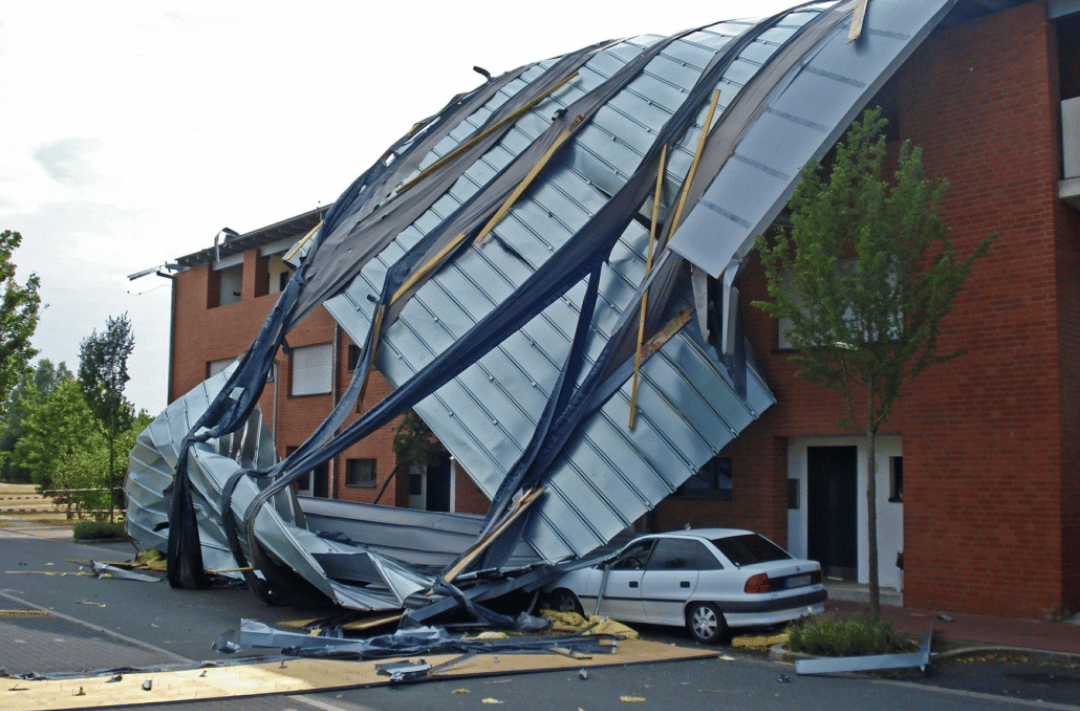
After a significant wind event, hail storm, or heavy snow load event, the visible damage to a roof — missing shingles, damaged flashing, torn membranes — may be the least of the structural concerns. High winds can partially lift roof sections, breaking rafter-to-wall-plate connections. Wet, heavy snow can overload roof framing to the point of permanent deformation. Impact from fallen trees or debris can damage structural members directly.
In any of these situations, getting a structural engineer involved before re-roofing is the right call. An insurance adjuster can document visible damage for claims purposes, but they are not qualified to assess structural adequacy. A roofing contractor can replace damaged cladding, but may not identify compromised framing underneath. The structural engineer assesses the actual condition of the load-carrying elements and specifies what must be repaired before new roofing is installed.
This is particularly important if you're making an insurance claim. Engineering documentation of structural damage is far more useful in a claim dispute than a roofing contractor's verbal assessment.
What Does a Structural Engineer Do on a Roofing Project?
Depending on the scenario, a structural engineer's involvement might include:
Existing conditions assessment. The engineer visits the site, inspects accessible framing (often from the attic), reviews any available original drawings, and assesses the current structural state.
Load calculations. Using the existing or proposed framing dimensions, lumber species and grade, span lengths, and applicable code loads (dead, live/snow, wind), the engineer calculates whether the structure has adequate capacity.
Remediation or design drawings. The engineer produces stamped drawings specifying what needs to be built, repaired, or reinforced. These drawings become part of the building permit application.
Field review. For complex projects or when specified in the contract, the engineer attends site at key construction milestones to verify work matches the design.
The cost for engineering on a roofing project varies with scope. A structural assessment and letter for a straightforward heavy-tile re-roof might cost $500 to $1,500. Full structural design drawings for a dormer addition typically run $2,000 to $5,000 or more depending on complexity. These fees should be viewed relative to the project cost and the risk of getting the structural decisions wrong.
How to Know If Your Roofing Project Needs an Engineer
If any of the following apply to your project, engage a structural engineer before work begins:
- You're switching from asphalt shingles to a significantly heavier material (tile, slate, thick shake)
- Your existing roof shows visible signs of sagging, deflection, or distress
- You're adding a dormer of any size
- You're changing the roof pitch, geometry, or converting from hip to gable
- You're adding rooftop equipment — solar, HVAC, or a green roof
- Your roof has sustained storm or impact damage
- Your roofing contractor has noted soft spots, damaged framing, or rot in the sheathing
- Your building permit application requires engineer-stamped drawings
When in doubt, a one-hour consultation with a structural engineer costs far less than discovering mid-project that the framing can't support what you've planned.
A Note on Permits
Most jurisdictions require building permits for roofing work beyond simple shingle replacement, and virtually all structural roofing work — dormers, geometry changes, anything involving framing modifications — requires a permit with engineer-stamped drawings. Unpermitted structural work creates problems when you sell, can void homeowners insurance coverage for related claims, and leaves you without the inspection documentation that protects you if something goes wrong later.
Your roofing contractor should be pulling permits as a matter of course on structural projects. If a contractor suggests skipping the permit to save money or time, take that as a significant red flag.
Final Thoughts
A roof is not just the skin of your house. It's a structural system that keeps everything below it safe, and changes to that system — whether intentional renovations or damage-driven repairs — can have consequences far beyond the roofline.
The good news is that structural engineering involvement on a roofing project is rarely as expensive or complicated as homeowners fear. In many cases, the engineer confirms that the existing structure is adequate, or specifies a straightforward reinforcement that the contractor handles quickly. The process adds time and some cost to the front end. What it protects you from is the kind of structural failure that no amount of roofing felt and shingles can prevent.
If your roofing project involves any of the scenarios in this guide, start with an engineer. Let the design drive the construction, not the other way around.
Considering a roofing project and not sure if it needs engineering? A licensed structural engineer can assess your situation quickly — often in a single site visit — and give you a clear answer before you've committed to any scope of work.
Easy steps to create a color palette
Lorem ipsum dolor sit amet, consectetur adipiscing elit lobortis arcu enim urna adipiscing praesent velit viverra sit semper lorem eu cursus vel hendrerit elementum morbi curabitur etiam nibh justo, lorem aliquet donec sed sit mi dignissim at ante massa mattis.
- Neque sodales ut etiam sit amet nisl purus non tellus orci ac auctor
- Adipiscing elit ut aliquam purus sit amet viverra suspendisse potent
- Mauris commodo quis imperdiet massa tincidunt nunc pulvinar
- Excepteur sint occaecat cupidatat non proident sunt in culpa qui officia
What is a color palette?
Vitae congue eu consequat ac felis placerat vestibulum lectus mauris ultrices cursus sit amet dictum sit amet justo donec enim diam porttitor lacus luctus accumsan tortor posuere praesent tristique magna sit amet purus gravida quis blandit turpis.

Don’t overspend on growth marketing without good retention rates
At risus viverra adipiscing at in tellus integer feugiat nisl pretium fusce id velit ut tortor sagittis orci a scelerisque purus semper eget at lectus urna duis convallis porta nibh venenatis cras sed felis eget neque laoreet suspendisse interdum consectetur libero id faucibus nisl donec pretium vulputate sapien nec sagittis aliquam nunc lobortis mattis aliquam faucibus purus in.
- Neque sodales ut etiam sit amet nisl purus non tellus orci ac auctor
- Adipiscing elit ut aliquam purus sit amet viverra suspendisse potenti
- Mauris commodo quis imperdiet massa tincidunt nunc pulvinar
- Adipiscing elit ut aliquam purus sit amet viverra suspendisse potenti
What’s the ideal customer retention rate?
Nisi quis eleifend quam adipiscing vitae aliquet bibendum enim facilisis gravida neque euismod in pellentesque massa placerat volutpat lacus laoreet non curabitur gravida odio aenean sed adipiscing diam donec adipiscing tristique risus amet est placerat in egestas erat.
“Lorem ipsum dolor sit amet consectetur adipiscing elit, sed do eiusmod tempor incididunt ut labore et dolore magna aliqua enim ad minim veniam.”
Next steps to increase your customer retention
Eget lorem dolor sed viverra ipsum nunc aliquet bibendum felis donec et odio pellentesque diam volutpat commodo sed egestas aliquam sem fringilla ut morbi tincidunt augue interdum velit euismod eu tincidunt tortor aliquam nulla facilisi aenean sed adipiscing diam donec adipiscing ut lectus arcu bibendum at varius vel pharetra nibh venenatis cras sed felis eget.