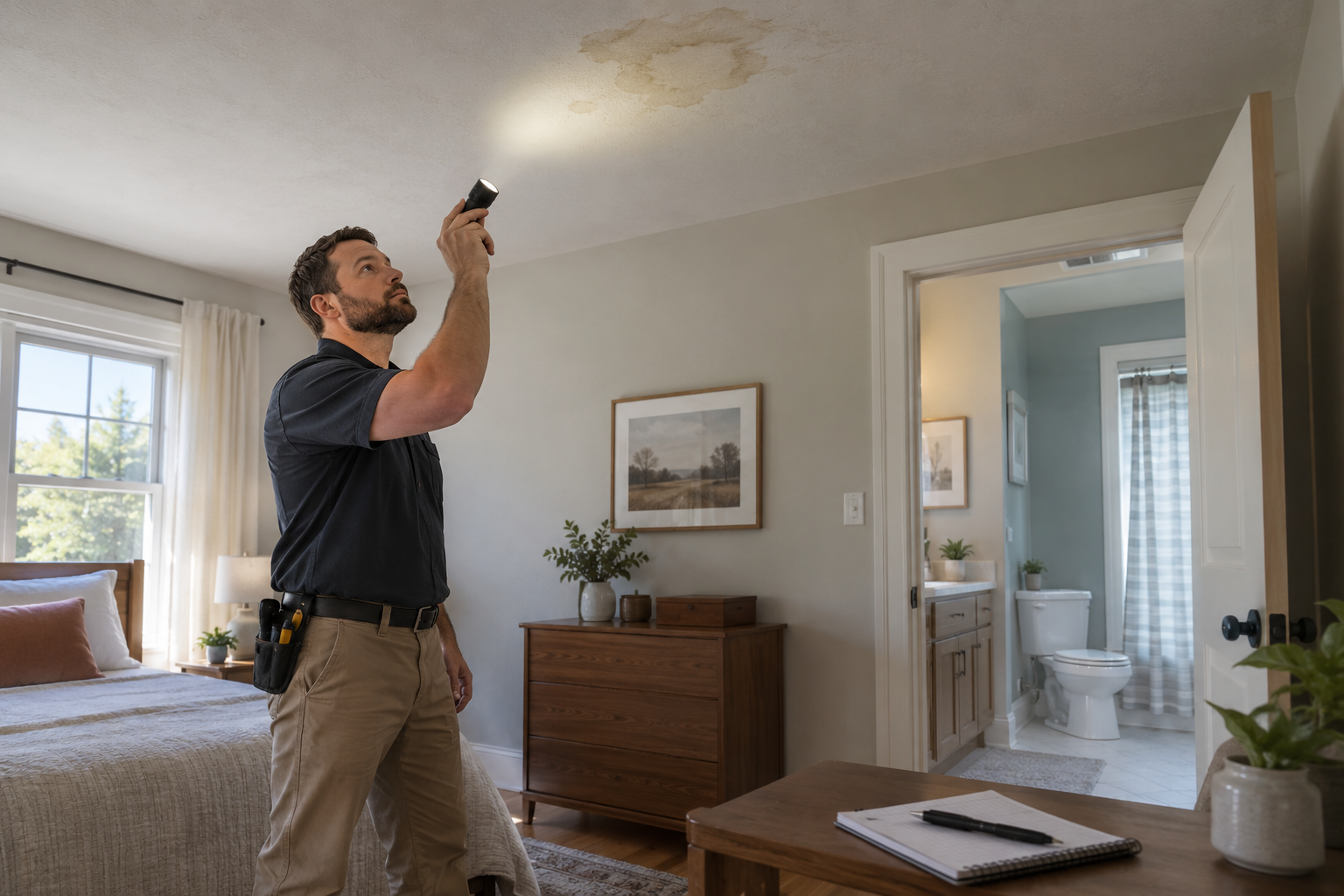
A drip from the ceiling naturally makes a homeowner look toward the roof. That is a reasonable concern, but it is not a diagnosis. Bathrooms, water lines, drains, appliances, and building systems above a room can produce similar ceiling damage. Water may also travel through concealed spaces before appearing, so the stain's location does not necessarily identify the source directly above it.
A useful leak response separates three questions: is the room safe, where is the water coming from, and what must be repaired after the source is corrected? Roofing and plumbing contractors can both be part of the investigation. The goal is to give each trade good evidence and a clear scope, rather than booking a roof replacement or ceiling patch before anyone has confirmed the cause.
Keep away from an unsafe ceiling
A ceiling that is sagging, bulging, shedding material, or collecting water can present a hazard. Keep people away from the area beneath it and do not poke a hole to drain it. Avoid standing directly below the damage to inspect it closely. If there is concern about collapse or another immediate danger, seek appropriate emergency assistance and keep the room clear.
Water near a light fixture, outlet, wiring, or other electrical component also changes the response. Do not touch wet electrical equipment or enter standing water. If you cannot safely access a known water shutoff or equipment control, leave it for the relevant professional. A ceiling leak should not prompt an improvised electrical or plumbing intervention.
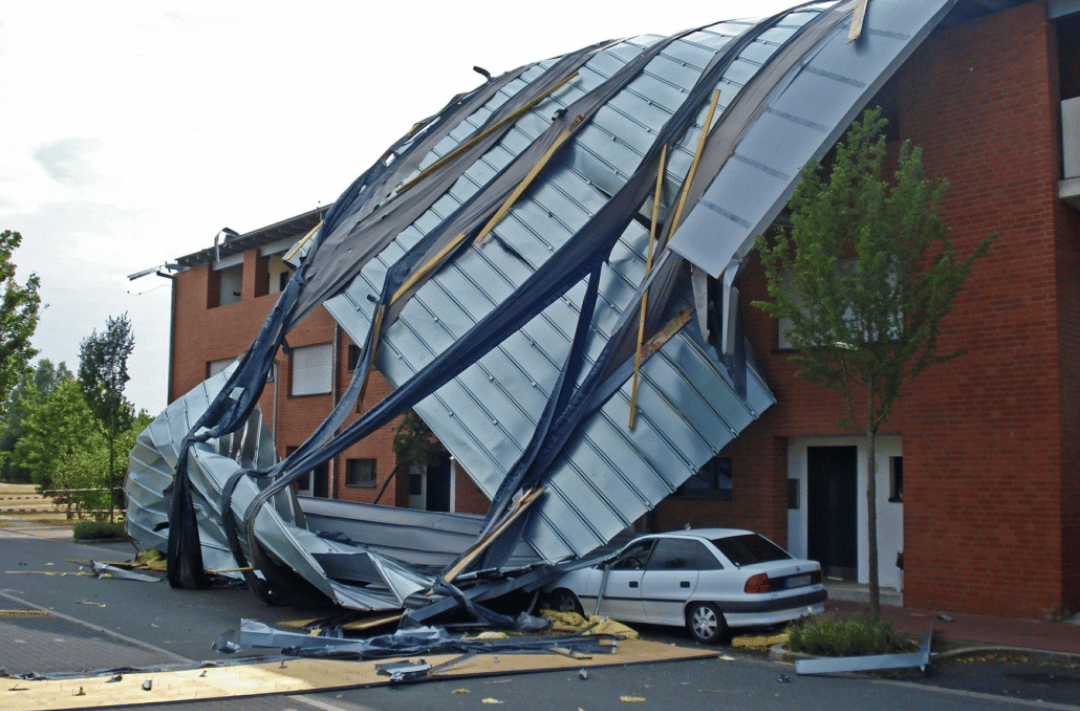
Do not climb onto the roof or enter an unsafe attic to establish the cause. Roof access involves hazards that increase during rain, snow, wind, or poor visibility. Ground-level observations and photographs taken from a safe place can support the initial service call. The responding contractor can decide how the roof or concealed area should be inspected.
Record when the leak changes
Timing can help direct the investigation. Note whether the drip began during rain, after snow conditions changed, after a shower, or during an appliance cycle. Record whether it continues during dry weather and when fixtures are not being used. Present these details as a timeline rather than proof of a particular cause.
A roof leak may not show up the instant precipitation begins, and a plumbing leak may appear some distance from the failed connection. Water can follow framing or other concealed surfaces before becoming visible. This means that a stain under a roof feature or bathroom deserves inspection, but its position alone should not determine the repair.
Keep the timeline simple enough to share. Photograph the whole room, then the visible stain or drip from a safe position. Include any earlier photographs if the mark has changed over time. Describe what occupies the floor or roof area above, if you know, and whether there has been recent roofing, plumbing, or renovation work.
Identify clues without creating more water
Useful clues include visible damage seen from the ground, a nearby plumbing fixture, a recent repair, or a repeatable pattern during normal use. Avoid treating these as instructions to run your own test. Repeatedly filling a leaking bathtub, operating an appliance, or spraying the roof can make damage worse and complicate the original evidence.
Do not remove interior finishes simply to see whether a pipe is wet. There may be wiring, accumulated water, damaged materials, or other concealed hazards. Tell the service provider what you can observe without disturbance. If access is necessary, it should be planned with the relevant trade and the safety of the room in mind.
The distinction between an observation and a conclusion matters. Saying that the drip began after a shower gives the plumber a useful starting point. Saying that the shower drain is definitely broken can narrow the conversation prematurely. The same applies to a roof valley, vent, or flashing detail that happens to be near the stain.
When a plumbing response should come first
Water escaping continuously from a known supply line, fixture, or appliance connection requires prompt source control. If the incident cannot wait for a normal service appointment, a 24/7 emergency plumber may be appropriate. Confirm service for your address and explain that the leak is affecting a ceiling, particularly if electrical fixtures or multiple rooms are involved.
If a known accessible valve can safely isolate the affected water supply, follow the system's instructions. Do not force a seized valve or experiment with unfamiliar controls. In a rental, condominium, or shared commercial building, notify the responsible manager promptly because isolation and access may affect other occupants or require building authorization.
The plumber should explain what was found, how the source was addressed, and how the repair will be checked. Keep those findings for any later roofing or restoration visit. If plumbing inspection does not confirm the cause, ask for a clear description of the remaining question rather than assuming that the roof must now be responsible by elimination.
When roofing inspection belongs in the plan
A pattern linked to weather, visible roof damage observed safely, or an unresolved ceiling leak can justify roofing inspection. The contractor should evaluate the relevant roof system and details rather than relying only on the interior stain. Different roof materials, penetrations, junctions, and drainage arrangements can require different inspection and repair approaches.
Provide the roofer with the timeline, interior photographs, and any plumbing findings. Describe known past leaks and recent roof work. If a temporary repair is needed, ask what it addresses and what permanent work remains. Temporary protection and a completed roof repair are different milestones and should be documented accordingly.
Do not assume that every roof leak requires replacing the whole roof. Equally, do not assume that a small visible mark means a minor roof repair. The appropriate scope follows the actual condition and cause. A good inspection explains the finding, the proposed repair, and any limits to the assessment caused by access or weather.
Allow for more than one contributing issue
Some incidents are not cleanly divided into a single plumbing or roofing fault. A building may have an older ceiling stain from one event and new moisture from another. Work in one area may reveal a separate condition nearby. Keep each finding tied to its evidence so the scope does not become a list of unrelated repairs with no clear connection to the current leak.
Where both trades are involved, name one point of contact and keep a shared record. Each contractor should know what has already been inspected and what remains uncertain. This can prevent repeated general searches and help the next visit focus on a specific unresolved question. It also makes it easier to compare findings if they initially appear inconsistent.
Ask how the investigation will establish that the source is corrected. The relevant checks differ with the system and conditions. A dry hour after a visit may not reproduce the weather or normal fixture use associated with the leak. Follow the contractor's monitoring instructions and avoid undertaking new tests that were not part of the agreed plan.
Address concealed moisture after source control
Stopping the drip does not automatically complete the repair. Water may have reached ceiling board, insulation, framing, or adjacent walls. Those materials need assessment before the opening is closed or the stain is painted. Where damage is substantial, concealed, or suspected to involve contamination, an experienced restoration professional may be appropriate.
The EPA's moisture guidance emphasizes fixing water problems and drying affected areas. For a ceiling repair, establish who will evaluate the materials and confirm readiness for reconstruction. That decision is separate from the plumber or roofer confirming the source repair, even when the same contractor coordinates several stages.
Do not use primer, texture, or a new ceiling panel to hide unresolved dampness. Ask for photographs of the affected cavity and retain relevant drying or cleanup information. If the ceiling belongs to a specialized building assembly, the reconstruction also needs to restore the applicable requirements rather than simply create a surface that looks similar.
Plan the ceiling finish after the cause is settled
The area requiring finish work can be larger than the initial stain or access opening. New board, joint finishing, texture matching, and painting need appropriate boundaries. A textured or strongly side-lit ceiling may show a repair differently from a flat surface in even lighting. Discuss appearance and painting scope with the reconstruction contractor before work begins.
Ask who will protect furnishings, handle disposal, prime the repair, and paint the final surface. If the roofer or plumber only opens the ceiling for access, another trade may be needed to restore it. Make that responsibility explicit. Otherwise, an incident can appear complete on the service invoice while the homeowner is left with an unassigned interior repair.
Keep future access requirements in mind where relevant. A serviceable plumbing component should not be covered without considering the appropriate arrangement, and a ceiling assembly should not be altered casually to create convenience. The responsible professionals can coordinate these requirements before the finish is restored.
Review the scope and retain the repair record
A useful project record includes the original timeline, photographs, inspection findings, the source repair, any required drying or cleanup information, and the reconstruction scope. Ask estimates to identify their boundaries and the process for approving concealed findings. Clear documentation is especially helpful when several contractors attend on different days.
After the work, observe the area during ordinary use and relevant weather, following the contractors' instructions. Record any fresh change and contact the appropriate provider promptly. An old dry stain is different from a new expanding mark, but both are easier to discuss when dated photographs exist. Avoid repeatedly repainting a symptom without resolving its cause.
Calgary Roofing lists residential and commercial roof systems, repair, and replacement services on its service website. Use its contact page to discuss the roofing portion of a ceiling-leak investigation and share any plumber's findings. A focused plan helps each trade address the right system and supports a complete repair from the water source to the finished ceiling.
Easy steps to create a color palette
Lorem ipsum dolor sit amet, consectetur adipiscing elit lobortis arcu enim urna adipiscing praesent velit viverra sit semper lorem eu cursus vel hendrerit elementum morbi curabitur etiam nibh justo, lorem aliquet donec sed sit mi dignissim at ante massa mattis.
- Neque sodales ut etiam sit amet nisl purus non tellus orci ac auctor
- Adipiscing elit ut aliquam purus sit amet viverra suspendisse potent
- Mauris commodo quis imperdiet massa tincidunt nunc pulvinar
- Excepteur sint occaecat cupidatat non proident sunt in culpa qui officia
What is a color palette?
Vitae congue eu consequat ac felis placerat vestibulum lectus mauris ultrices cursus sit amet dictum sit amet justo donec enim diam porttitor lacus luctus accumsan tortor posuere praesent tristique magna sit amet purus gravida quis blandit turpis.

Don’t overspend on growth marketing without good retention rates
At risus viverra adipiscing at in tellus integer feugiat nisl pretium fusce id velit ut tortor sagittis orci a scelerisque purus semper eget at lectus urna duis convallis porta nibh venenatis cras sed felis eget neque laoreet suspendisse interdum consectetur libero id faucibus nisl donec pretium vulputate sapien nec sagittis aliquam nunc lobortis mattis aliquam faucibus purus in.
- Neque sodales ut etiam sit amet nisl purus non tellus orci ac auctor
- Adipiscing elit ut aliquam purus sit amet viverra suspendisse potenti
- Mauris commodo quis imperdiet massa tincidunt nunc pulvinar
- Adipiscing elit ut aliquam purus sit amet viverra suspendisse potenti
What’s the ideal customer retention rate?
Nisi quis eleifend quam adipiscing vitae aliquet bibendum enim facilisis gravida neque euismod in pellentesque massa placerat volutpat lacus laoreet non curabitur gravida odio aenean sed adipiscing diam donec adipiscing tristique risus amet est placerat in egestas erat.
“Lorem ipsum dolor sit amet consectetur adipiscing elit, sed do eiusmod tempor incididunt ut labore et dolore magna aliqua enim ad minim veniam.”
Next steps to increase your customer retention
Eget lorem dolor sed viverra ipsum nunc aliquet bibendum felis donec et odio pellentesque diam volutpat commodo sed egestas aliquam sem fringilla ut morbi tincidunt augue interdum velit euismod eu tincidunt tortor aliquam nulla facilisi aenean sed adipiscing diam donec adipiscing ut lectus arcu bibendum at varius vel pharetra nibh venenatis cras sed felis eget.