When the snow on a roof melts or heavy rain hits, the problem sometimes shows up two storeys below the eaves. The gutters spill, water lands beside the house, and a damp patch develops at the bottom of a basement wall. A roof can shed water exactly as designed and still contribute to a flood when the route from the roof to the yard breaks down.
Start by tracing the water from the roof surface to its final destination. Watch where it collects, where it drops and where it goes after touching the ground. The location of a basement stain gives you a place to begin looking, although water can move sideways through soil or behind finishes before it becomes visible indoors.
Follow the water from the roof to the ground
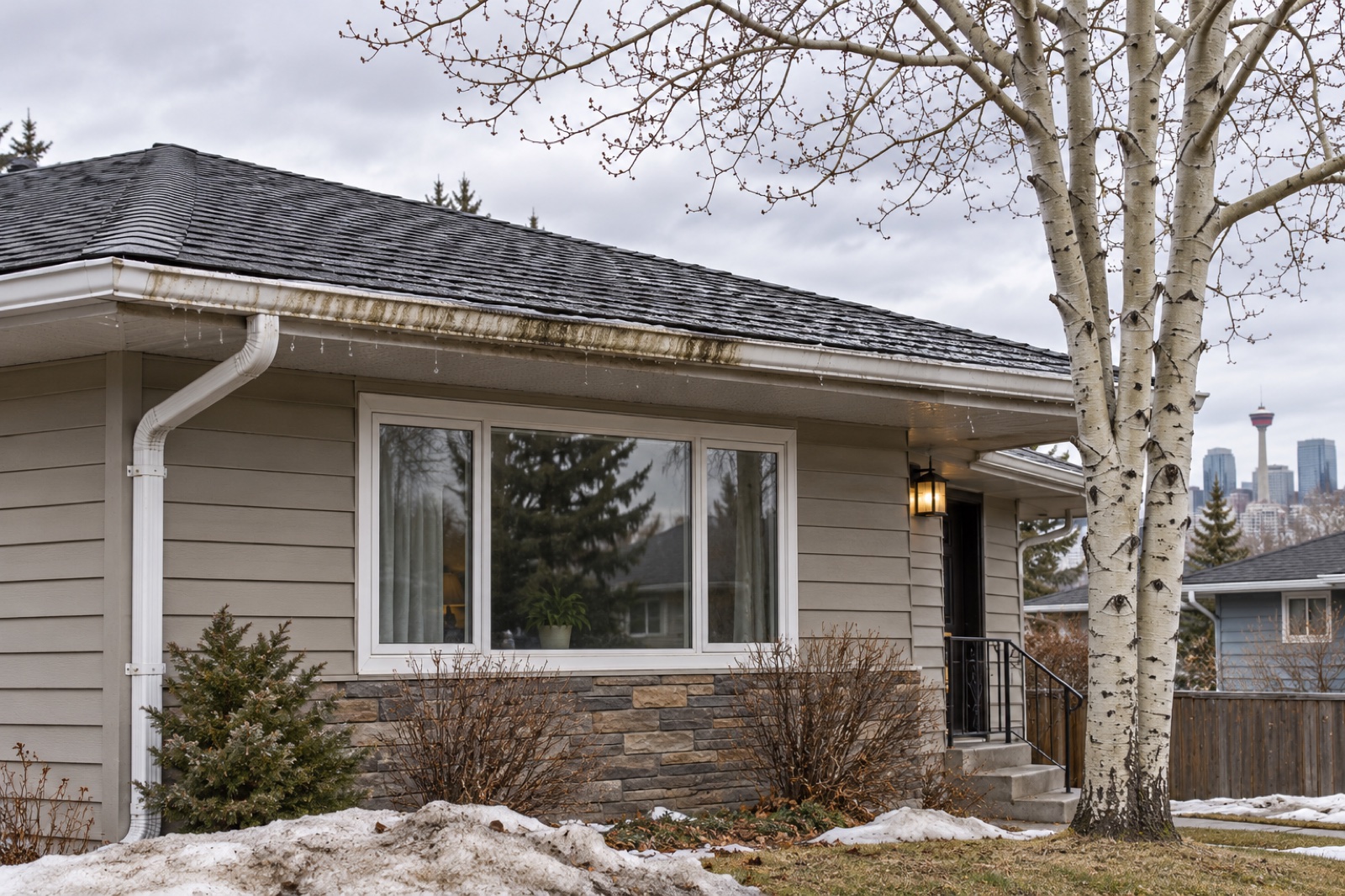
From a sheltered position on the ground, observe the roof during rain if conditions are safe. Watch the ends of long gutter runs, inside corners below roof valleys and the spot where an upper downspout empties onto a lower roof. A roof valley collects runoff from two planes. The gutter beneath it may be asked to carry much more water than another segment of the same length.
A curtain of water from one small section of gutter can point to a local problem. Look for a packed outlet, a sag around a hanger or poor alignment where two runs meet. Water pouring over a wide stretch can have different causes, including several clogged outlets or an undersized system. The pattern gives a roofer a starting point. Record a short video from the ground and include enough of the roofline to show which surfaces feed that section.
Notice when overflow begins. An outlet that runs freely at the start of a storm and then disappears under water deserves a look downstream. Debris can shift during rain, and an elbow, buried line or crushed extension can slow discharge. In winter and early spring, meltwater can also meet ice at a shaded outlet. Schedule inspections when the roof and access points are safe. Ice, wet rungs and windy conditions make a ladder a poor place to investigate.
Check where the downspout actually discharges
A downspout can carry water to ground level and still send it straight back to the house. Stand at the outlet and look for compacted soil, a strip of gravel against the wall or paving that slopes toward the foundation. A splash block pointed away from the house offers little help if it ends beside a sunken walkway that channels the water back.
Position downspouts to carry water away from the foundation and your neighbours’ property. In a narrow side yard, work out where the water goes beyond the end of the extension. A practical outlet protects the foundation while respecting neighbouring properties and local drainage rules.
Check extension pipes each season. A hinged extension left upright after mowing can release the next storm's entire roof load beside the wall. Temporary hoses can flatten under a gate or develop a low spot that holds water. If the downspout drains underground, ask a qualified contractor to identify the destination and condition of that line. Pouring a bucket into its mouth may prove that the first few feet accept water, with little indication of how the full run behaves during a long storm.
Use the indoor evidence carefully
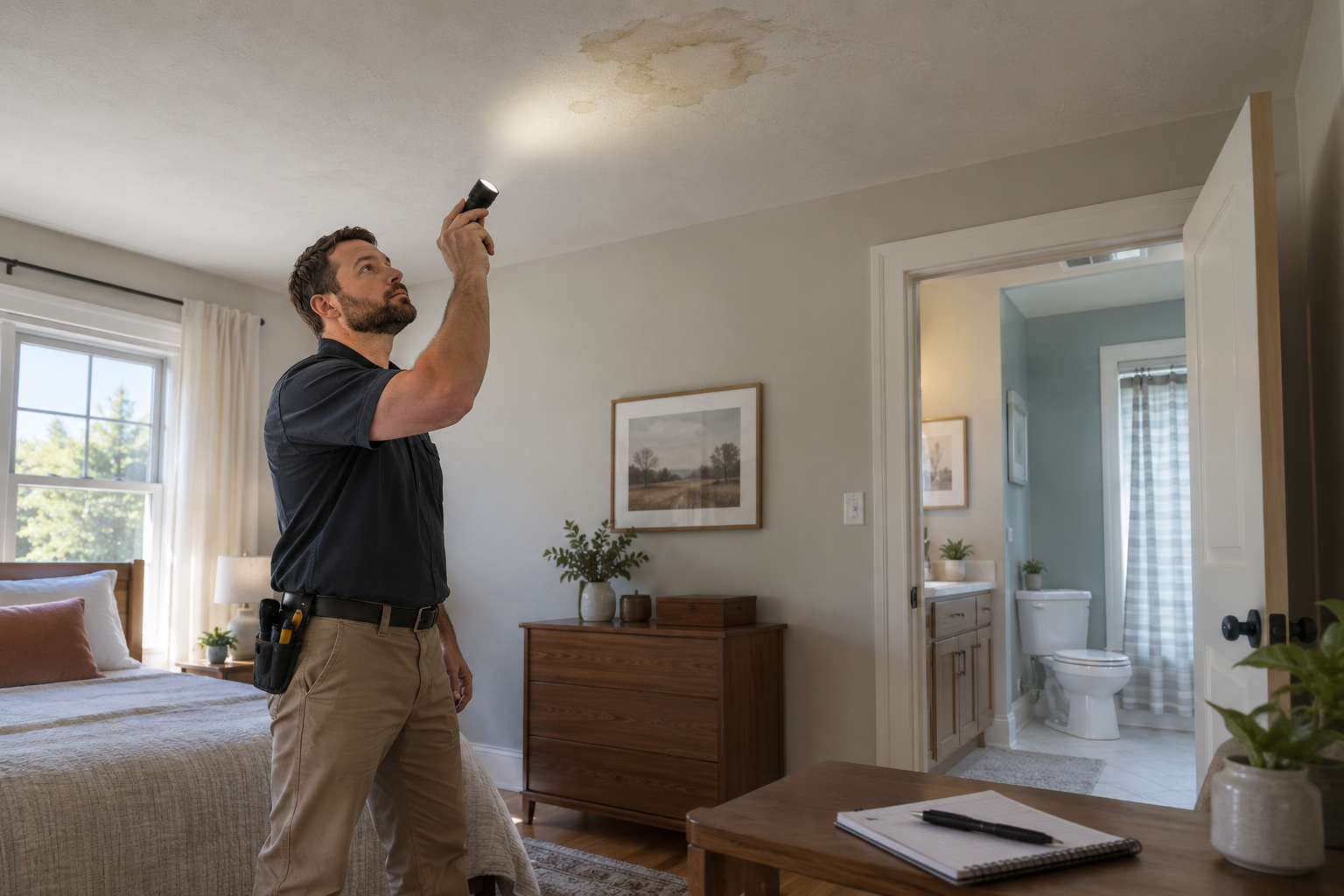
A stain that begins on an upstairs ceiling shortly after rain can point toward a roof penetration, flashing or ice-dam issue. Dampness at the basement wall-to-floor joint near a downspout suggests a different path. If water emerges from a floor drain or plumbing fixture, a drain or sewer problem needs investigation. A home can experience more than one of these during the same storm.
Compare the timing of the stain and the storm. Write down which side received wind-driven rain, the first time anyone saw indoor water and whether the ground was already frozen or saturated. Photograph any stain lines from a safe, dry area. Keep older photos if you have them. A contractor may want to know whether the same patch appeared when the gutter was clear or after a storm arrived from another direction.
Ask each trade to describe what it observed and what still needs testing. A roofer may be able to locate the spill or repair the collection system. A foundation or drainage contractor may need to inspect the slope, footing drainage or window well. A restoration team can assess how far moisture spread through the interior assembly. Putting each observation on the same timeline can prevent one plausible explanation from obscuring another.
Decide what needs attention first
If standing water is present or an electrical hazard is possible, keep people and pets out of the affected basement and follow local emergency guidance. Contact the appropriate emergency or utility service when there is an immediate hazard. Take photos and call your insurer when you can do so safely. A date-stamped record of the overflow, the outside pooling and the indoor damage is easier to assemble before cleanup and repairs change the scene.
When water gets behind finished walls, under flooring or into insulation, ask a restoration contractor to assess the affected areas and explain how drying will be checked. If several materials are wet, ask your basement flood restoration contractor to check them before work begins on the finishes. Have the roofer or drainage contractor share the suspected entry path with the cleanup team.
Keep the exterior and interior work coordinated. A drying setup can run while roof drainage is being assessed, provided the professionals agree the space is safe. Reinstalling trim and flooring before checking the wall cavity or correcting a repeat entry path can leave you facing another round of demolition after the next downpour.
Plan a repair that holds up through the next thaw
Ask your roofer to show where water arrives at the gutter and how it leaves. If the outlet is packed, clearing it may be enough. If the overflow repeats with a clear outlet, the fix might involve correcting pitch, moving or adding a downspout, addressing runoff concentrated at a valley or replacing a damaged section. Have the contractor check fasteners and conditions at the fascia when the gutters have been leaking repeatedly in the same spot.
Review the surface water path after the roof work. Water may still gather near a low window well or the bottom of basement stairs. Take a photo after a moderate rain and compare it with the earlier one. If the gutter is now flowing and the ground still forms a pond against the wall, share both photos with the person assessing the property drainage. They show which part of the problem changed.
Leave a simple maintenance note with the home records. Include the location of any buried lines, who checked them, where the extensions belong and which section of gutter deserves a look each spring. After the next storm or thaw, check from the ground whether the eaves are carrying water to the intended outlet. Indoors, keep an eye on the original stain area once repairs and drying are complete. A clear path from the roof to a safe discharge point is easier to maintain when everyone in the household knows what it looks like.
What to include in a drainage inspection request
Send your contractor a wide photo of the roof and a second one of the gutter outlet. Mark the side of the home where the basement first got wet. A simple drawing that shows the downspout, walkway and lowest spot in the yard can save time when the outlet disappears behind a deck or hedge. Note whether the gutter or downspout was cleaned before the event, who did the work and whether it changed the way the system flowed.
If you're comparing quotes, ask each contractor to name the part of the water path their work covers. The roofing scope may end at the downspout outlet. Regrading a walk, changing a window well or repairing an underground discharge pipe can require additional work. Confirm who will check that these changes work together. A repair can look complete at the eaves while runoff continues to travel toward the same vulnerable basement opening.
Easy steps to create a color palette
Lorem ipsum dolor sit amet, consectetur adipiscing elit lobortis arcu enim urna adipiscing praesent velit viverra sit semper lorem eu cursus vel hendrerit elementum morbi curabitur etiam nibh justo, lorem aliquet donec sed sit mi dignissim at ante massa mattis.
- Neque sodales ut etiam sit amet nisl purus non tellus orci ac auctor
- Adipiscing elit ut aliquam purus sit amet viverra suspendisse potent
- Mauris commodo quis imperdiet massa tincidunt nunc pulvinar
- Excepteur sint occaecat cupidatat non proident sunt in culpa qui officia
What is a color palette?
Vitae congue eu consequat ac felis placerat vestibulum lectus mauris ultrices cursus sit amet dictum sit amet justo donec enim diam porttitor lacus luctus accumsan tortor posuere praesent tristique magna sit amet purus gravida quis blandit turpis.

Don’t overspend on growth marketing without good retention rates
At risus viverra adipiscing at in tellus integer feugiat nisl pretium fusce id velit ut tortor sagittis orci a scelerisque purus semper eget at lectus urna duis convallis porta nibh venenatis cras sed felis eget neque laoreet suspendisse interdum consectetur libero id faucibus nisl donec pretium vulputate sapien nec sagittis aliquam nunc lobortis mattis aliquam faucibus purus in.
- Neque sodales ut etiam sit amet nisl purus non tellus orci ac auctor
- Adipiscing elit ut aliquam purus sit amet viverra suspendisse potenti
- Mauris commodo quis imperdiet massa tincidunt nunc pulvinar
- Adipiscing elit ut aliquam purus sit amet viverra suspendisse potenti
What’s the ideal customer retention rate?
Nisi quis eleifend quam adipiscing vitae aliquet bibendum enim facilisis gravida neque euismod in pellentesque massa placerat volutpat lacus laoreet non curabitur gravida odio aenean sed adipiscing diam donec adipiscing tristique risus amet est placerat in egestas erat.
“Lorem ipsum dolor sit amet consectetur adipiscing elit, sed do eiusmod tempor incididunt ut labore et dolore magna aliqua enim ad minim veniam.”
Next steps to increase your customer retention
Eget lorem dolor sed viverra ipsum nunc aliquet bibendum felis donec et odio pellentesque diam volutpat commodo sed egestas aliquam sem fringilla ut morbi tincidunt augue interdum velit euismod eu tincidunt tortor aliquam nulla facilisi aenean sed adipiscing diam donec adipiscing ut lectus arcu bibendum at varius vel pharetra nibh venenatis cras sed felis eget.